
The Way
The Fellowship
Islamic learning remains central, but The Fellowship asks more of a man than attending classes or gaining knowledge.
It asks him to examine himself honestly, identify the areas of his life that require work, put what he learns into practice, and remain accountable to that process over time.
Going Deeper
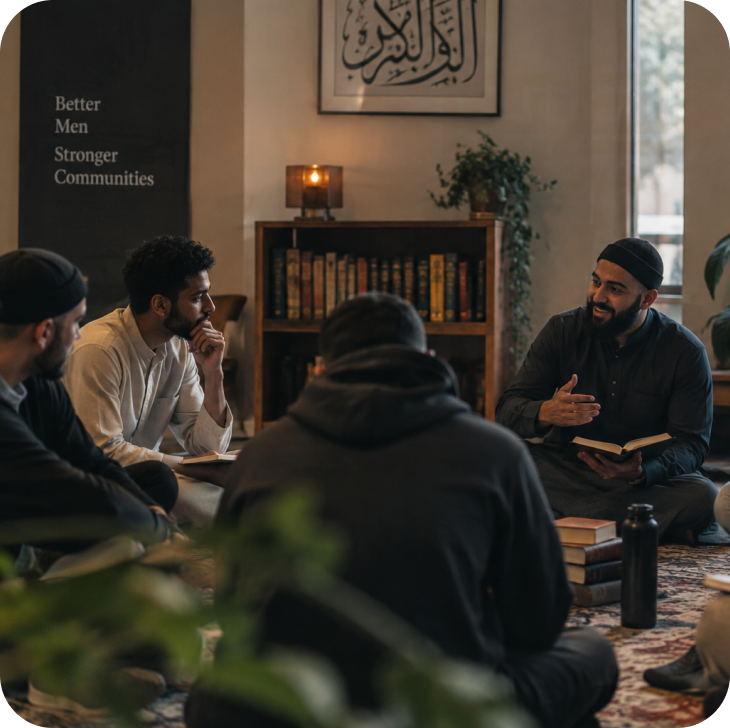
Some conversations require trust.
The Fellowship creates a smaller and more committed environment where men can move beyond general discussion and engage more honestly with the realities of their own lives.
Marriage. Fatherhood. Anger. Desire. Worship. Habits. Relationships. Responsibility. Failure. Ambition. Fear. The patterns we inherited and the patterns we may be passing on.
The goal is not forced vulnerability or public disclosure. It is to create enough trust for honest conversations that are difficult to have in larger or more public settings.
Self-Reflection
Refinement begins with the willingness to see yourself clearly.
The question gradually becomes less about what a man knows and more about what that knowledge is revealing about the way he actually lives.
Implementation
Insight without action changes very little.
- Learn
- Reflect
- Implement
- Return
- Reassess
Accountability
A commitment becomes more serious when someone expects you to return to it.
Companionship
This work is difficult to sustain alone.

Waypoints
Where am I on the path, and what requires my attention next?
Waypoints create space to review worship, personal disciplines, character, relationships, responsibilities, commitments, areas of progress, and areas where a man continues to struggle.
A Serious Commitment
The Fellowship is designed as a participatory environment.
Courses are taught in a live virtual classroom. Fellows are expected to attend consistently, keep their cameras on, participate actively, engage in the practices between gatherings, and take part in regular self check-ins.
Progression through The Fellowship reflects sustained engagement with the process, not simply completion of coursework. Attendance, participation, engagement, implementation, and regular self check-ins all help demonstrate a Fellow’s commitment to refinement.
Advancement to the next level reflects sustained participation in both the learning and the practices that surround it.
The Fellowship is for men willing to do more than learn about refinement.
It is for men willing to undertake it.
Apply to the Fellowship
Applications are reviewed privately by the
Al Tariq team.